Sunday, September 17, 2017

How to Build a Brain without a Brain:

Here are some examples of an Intuitive Aneural Network, a network that stores and processes information without a brain or neurons (The Brein Theory), and its six major elements.

Perhaps, some time during your childhood days, you playfully send messages through a friend using a string telephone, a toy which is made up of two tin cans where each end is connected by a 20 foot long string. . When information is send through the first can, the information travels to the string, and receives by the second can. This simple telephone setup illustrates a model of what a system is and what it is made up of.

In any system, there are always six major components present. Technically, they are the incoming message called the input, the flowing message called the medium and the outgoing message called the output. Moreover, the first can, where the input flows, is called the collector; the string, where the medium flows, is called the carrier; and the second can, where the output flows, is called the actuator.

The six major elements of a system can also be divided into two parts. The input, medium and output are the first part of the system; while, the collector, carrier and actuator are the second part. The first parts are all non-materials(materialize) while the second parts are all solid material objects. All materials and materialize are singularly called physicals. A very important concept in understanding a system.


From the drawing above, the collector serves as the switch, the carrier as the wire, and the actuator as the light bulb. The input signal comes from the switch, flows into the medium, and releases the output as light. Note, the battery here serves as the inducer hub. In this demonstration, information is stored and processed without using any neuron or brain.


In a nerve cell (neuron), signals are received by the dendrites, processed by the cell body, and transmitted as output into the axons. The neuron is the basic unit in the nervous system. It is a specialized conductor cell that receives and transmits electrochemical nerve impulses. A typical neuron has a cell body and long arms that conduct impulses from one body part to another body part. There are three different parts of the neuron: the cell body, dendrites, and axon. The cell body has several highly branched, thick extensions that appear like cables and are called dendrites. The exception is a sensory neuron that has a single, long dendrite instead of many dendrites. Motor neurons have multiple thick dendrites. The dendrite's function is to carry a nerve impulse into the cell body.  An axon is a long, thin process that carries impulses away from the cell body to another neuron or tissue. There is usually only one axon per neuron. Neurons in the body can be classified according to structure and function. According to structure neurons may be multipolar neurons, bipolar neurons, and unipolar neurons: Multipolar neurons have one axon and several dendrites. These are common in the brain and spinal cord Bipolar neurons have one axon and one dendrite. These are seen in the retina of the eye, the inner ear, and the olfactory (smell) area. Unipolar neurons have one process extending from the cell body. The one process divides with one part acting as an axon and the other part functioning as dendrite. These are seen in the spinal cord.


In plants ... veins in leaves, stems and roots are the neural network


In computers ... the hardwires on the motherboard, transmitter, receiver and the softwires on the atmospheric channels are the neural network.


The Cobweb Neural Network Connection, or CoNNeC, is one of the alternative systems of networks that stores and processes information without compensating heavily on neurons or a brain. The information is simply stored and processed into the network by mediums and carriers (Lawsin 1988).

In the Cobweb Neural Network, the web is the neural network. In this demonstration, information is stored and processed in the web, the fly is the trigger, and the spider serves as the brain.

With all these various labyrinths of neural networks, could the skin, the largest organ from where portions of it shrunk to become the brain, be the real neural network of the human body and not the brain?


Excerpt from the book: Biotronics: The Silver Species


 ==================================================================
"Just because you have a brain doesn't mean you are conscious;
just because you are alive doesn't mean you have a brain." 
~ Joey Lawsin
==================================================================

NOTICE: Articles on this site are composed on random thoughts. The transcript may not be in its final form. It maybe edited, updated or even revised in the future based on the outcomes of  the author's experiments.

Public Domain Notice: Copyright (c) 2000. All rights reserved. This article is part of a book entitled Biotronics: The Silver Species. Copies are welcome to be shared or distributed publicly as long proper citations are observed. Please cite as follows: The Biotronics Project, Joey Lawsin, 1988, USA.

================================================================== 
The Homotronics® and Homodruinos® logos are registered trademarks.
Copyright Biotronics© Inc. iHackRobot®. All Rights Reserved.
Patent Pending. 2000 © ®
 ==================================================================


Monday, September 11, 2017

The Idea that Change the World

The Lawsin Linkage
In his book Creation by Law, Lawsin argued that: "If atoms are not alive and humans are made up of atoms, then humans are not alive as well."

In his second book, Evolution of Creation, however, he discovered that "Matter has been alive since the beginning of time."

"The two statements may seem contradictory, but they are not a conundrum", he explained.

Every object that we see is made up of matter. Information Materialization named this stuff as physicals. However, matter also comes with other parameters that we don't see (which the Big Bang Theory has failed to acknowledge). Examples of these accompanying parameters are heat, pressure, gravity, density, temperature, weights to name a few. They coexist always with the physicals. These parameters are called non-materials. They are the other part of the physical matter.

Thus, Matter is made up of two parts: materials and non-materials. Both materials and non-materials are collectively called Physicals. They are neither created nor destroyed. In other words, they don't live or die. They just interact and transform from one form to another. Due to these complex interactions and transformations of the materials and non-materials, like the gears and dynamics inside a clock, Matter becomes automated, animated over time. Matter becomes alive. This phenomenon of being alive or automatos (acting on oneself) is called The Animation Effect (Lawsin 1988).

 The Lawsin Linkage Animation

During the Big Bang, Matter cohesively exists due to the forces pulling and pushing it. These forces of centripetal and centrifugal are unitedly called gravity. When matter moves, they create some form of friction, heat, temperature, vacuum, pressure, weight and density to name a few. Because of these inert parameters, internally, matter is in animated state.

As time passes by, some of these physicals become more highly animated as the system transforms from simple to more complex. The illusion of "living or life" is now born. Matter becomes "alive". From the seven rules of creation proposed in the same book, some forms of matter will become less active. These types of matter are the non-living things. The other forms which are more active will become highly animated. These highly animated forms of matter are called living things. But remember, these living things are not actually “living” or with life, they are simply forms of matter living in an intricate interconnected animation. Life evolved because matter was already animated since the beginning of time.

Now, if Life is caused by the animation effect, could it also be true that consciousness is caused by the same effect?

Lawsin coined the expression "The Human Mental Handicap" in attempt to define consciousness in its simplified form. He claimed that "No Humans can think of something without representing such something with a physical object". Before one can think of something, the object of such thought must be present first. This object comes first before the brain can visualize it (eg. birds to airplanes). To be conscious, one must be able to pair or represent what he thinks or senses with something material, a physical object.

If plants can hear, smell, feel and remember their surroundings, then it shows that they have the ability to associate what they sense with another objects. If they can feel warm, then they know what hotness is. If they can hear music, then they can differentiate regular from irregular waves, or maybe breeze to noise. If they have the ability to defend themselves by chemical stimulants that attract a particular group of insects, they have the ability to match odors with insects. This one to one correspondence, matching one thing with another thing, is the I.M. determinants that indicate when something is conscious or not.

Just like dogs that use objects like bowls, balls, and bones and pair them with words like food, play, and walk respectively just shows that dogs are conscious beings. Their ability to associate or represent mental images with physical objects is an indicator that proves dogs are conscious beings. This type of associative or representational learning is called Dualpairing Learning.

Dualpairing is a basic type of learning based on the Caveman in the box and the Human Mental Dilemma. It is a one-to-one correspondence where abstract subjects are represented by physical objects. Ideas are abstract subjects. Without physical objects, abstract ideas will not exist. Ideas must be represented first by objects such as a label, tag, name, word, definition, or by association in order to be realized.

I.M. Determinants of Consciousness:
1. Any species with babies are conscious beings.
2. Any species who lives in caves, nests, undergrounds are conscious beings.
3. Any species who sleeps are conscious or once conscious beings.
4. Any species who can distinguish or reacts with hot or cold are conscious beings.
5. Any species who can defend themselves are conscious beings.
6. Any species who mates are conscious beings.

Remember, that not all with brains are conscious and not all that are alive have brains.

Arguments:
1. Can plants differentiate hot from cold?
2. Do plants sleep? mechanical? chemical?
3. Do plants react with their surroundings?  vice-versa?
4. How do you determine the degrees of consciousness on each living thing? Senses? Brains? Ability to match, label or pair?

Conclusions:
1. Caveman in the Box Theory
    - Nature is the Mother of physical Information
    - Nature is the keeper of the database of everything
    - Humans are the Father of abstract information
    - Humans learn by mimicking
2. Human Mental Dilemma
    - man cannot think/visualize/sense of something without representing/labeling/matching it with a physical object.
3. Information Materialization
    - material and non-material objects are called Physicals; while, non-physical subjects are called Abstracts.
    - Ideas flow from material to non-material

Inscriptionism:

Inscriptionism, a word coined by Joey Lawsin, is a view that everything, including existence and consciousness, can be explained by the the laws of inscription and emergence which claim that the actions and behaviors of every object are influenced by its intuitive materials and embedded instructions. Everything is bound by Inscription by Design and by the Theory of Generated Interim Emergence, also known as The Single Theory of Everything.


Incriptioned = structural algorithm
Programmed = computer algorithm


 ==================================================================
" Matter is animated since the beginning of time. 
Humans are the product of this animation." 
~joey lawsin
==================================================================

NOTICE: Articles on this site are composed on random thoughts. The transcript may not be in its final form. It maybe edited, updated or even revised in the future based on the outcomes of  the author's experiments.

Public Domain Notice: Copyright (c) 2000. All rights reserved. This article is part of a book entitled Biotronics: The Silver Species. Copies are welcome to be shared or distributed publicly as long proper citations are observed. Please cite as follows: The Biotronics Project, Joey Lawsin, 1988, USA.

================================================================== 
The Homotronics® and Homodruinos® logos are registered trademarks.
Copyright Biotronics© Inc. iHackRobot®. All Rights Reserved.
Patent Pending. 2000 © ®
 ==================================================================


"Just because you have a brain doesn't mean you are conscious;
just because you are alive doesn't mean you have a brain." 
~ Joey Lawsin


Saturday, September 9, 2017

The Litmus Tests of Self-Consciousness

"Cogito Ergo Sum" is a Latin phrase coined by Rene Descartes. When translated to english, it means "I think, therefore I am".  The statement philosophically suggests that the very act of thinking demonstrates the reality of one’s existence and consciousness.

However, IM argues that the dictum is wrong based on: first, the Two Brain Theory, a notion  parallel to the concept behind the phrase " no man is an island"; second, some organisms are alive and conscious but without brains; and third, some organisms experience existence and consciousness in different ways as illustrated in the evidence below:

 i. The Lawsin Syndrome:


Is it really me or it is only in the brain?

This is the very first intuitive question raised when he saw his face, half of which was missing just like the picture above minus the mechanical gears. Yes, this patient's face was half empty, hollow, concave as he was looking at himself on the washroom mirror. His right eye, right ear, right half of his nose, lips and chin were nowhere to be found. The unusual disturbing phenomenon actually happened several times in his childhood days. The event might be weird but it's true.

Is his perception of reality an illusion or just a distorted form of consciousness?


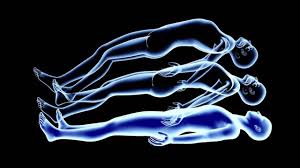
ii. Astral Projection:

The representation of astral projection on this picture is totally deceptive.

The picture above made me laugh when I saw this posted on different websites and books. The artist or promoter of such concept either has no personal experience about the phenomenon of astral projection or has zero idea of what an out of body experience really is.

AP is a very important topic because it suggests that soul exits.

Some practitioners believe that the body is separated from the mind. Some believe that the soul lives in the mind and leaves when the body dies. Some equate the soul with consciousness. Whatever the idea is, the concept seems to be any ones guess. However, experiencing OOB four times in my life, led me to the conclusion that the soul doesn't exist.

Sometimes common sense observations and experiences are not sufficient enough to make us believe. Empirical experiments and qualitative investigations are also needed to backup our perceptions of the real world. Following the regimens of all of these scientific requirements, I have objectively concluded that the soul is simply a product of imagination. Let me explain.

When I was young, ....


iii. Dreams:

a picture is worth a thousand pixels


What are dreams? Is it part of consciousness? Is it a product of emotions (eg. a lost feeling), a half-way occurrence (eg. a to be continued event), or simply an energizer switch (eg sleep)?

Have you ever experienced in your life that sensation of incompleteness? The feeling of not finishing a certain event and finding its way into your dream? Like meeting a familiar face while walking on a street and abruptly forget the event until you go to bed and finds its way in your dream??

And what about the sensation of falling from the edge of your bed that suddenly becomes a part of your dream and triggers a safety warning in your mind to wake you up and stops your body from falling down the floor?

Or, walking while sleeping? Are we conscious when we are dreaming?


iv. Synesthesia: The Distorted Sense of Reality:

Why some synesthetes who can taste the color red can see colors by tasting? Why some see by hearing, smell by touching, taste by hearing, or even smell sounds? Are senses interchangeable just like the way ears for seeing, nose for tasting, or skin for hearing? Is this mixed sense caused by the environmental experiences we had inside our mother's womb?

Or, if some people and animals can interchange their senses of hearing, touching, smelling, etc., could it be because our biological sensors originated and evolved from the largest organ in our body; the skin? If so, could the skin be the area where consciousness reside as pointed out in the book Originemology?

According to IM, our senses are triggered individually and not collectively. However, our brain when in overdrive sometimes messes up things that we sense: seeing, feeling, hearing, tasting, smelling and balancing. Sometimes what we say influences what we hear and sometimes what we see changes what we hear. Even more, sometimes what we think can change what we hear? A simple experiment is all that it takes!


Recently, an app was developed by the author as part of his ingenious experimental strategies on the developmental origin of self-awareness. It is a game application where insects are smashed by tapping each one with a finger to score points. When bugs are deliberately tapped continuously, the word "HIT" sounds off repeatedly over and over again.

The fun part of the app is when the word HIT in your mind is mentally replaced with the word "HIP" from after minutes of playing, something amazing happens inside the brain. Although the ears hear “HIT,” the brain says “HIP”. Furthermore, the weirdest part of this experiment is when you try to replace back the word HIP with HIT, your brain will not let you do it anymore. You're totally stuck at the moment!

This quick or brief phenomenon is known in I.M. as the Brain Priority Effect. Sometimes called the Q-priority preference, the theory reveals that our brain prioritizes the outputs of our sensory organs. In the above case, it goes from the brain to the ears.

In addition, the above theory also reveals that Q-priority not only pertains to the outputs but also to the inputs acquired by our biological sensors. This is one of the main ingredients that brings a robot to self-consciousness, a secret method foretold in the book Biotronics: The Silver Species. (Lawsin, 1988)

v. The Thinking Mistakes of the Brain:

These are multiple examples compiled by the author that illustrate some of the thinking mistakes the brain decides which humans subconsciously make all the time.

One example is an experiment Lawsin conducted using a coin. He named this the Gambler's Gambit.

Imagine you are playing Heads or Tails with someone. You flip the coin to him each time guessing whether it will be a head or a tail. Mathematically, we know that the chance of turning it either a tail or head is 50-50 each flip. However, most people will still insist that even though you flipped the coin several times and it always turned up heads every time, the chance of a tail in the next flip is much higher than before. This prediction is again incorrect! The next chance of converting the flip into tail is still 50-50. The chance don't change :-)

For the next stage of his experiment, Lawsin incorporated the Frequency of Occurrence Illusion. It is a thinking mistake where the brain seeks out information that's related to such information occurring frequently everywhere. A good example of this occurs when someone is in love. The name of the sweetheart seems to be seen everywhere; on a commercial, a character in the movie, on a billboard or a wall, in a newspaper or page of a book. Or, when someone in the office, who is wearing a green shirt, notices other people in the building also wearing the same color of clothes. This phenomena is sometimes called Synchronicity.

Here are other interesting examples from another of Lawsin's experiments:
a) The Belief Bias - humans dismiss or ignore logical facts that are not in accordance with their beliefs.
b) The Majority Effect - humans conform to social decisions based on quantity of numbers.
c) The Software Illusion - humans perceive only the face value of what they sense.


NOTICE: Articles on this site are composed on random thoughts. The transcript may not be in its final form. It maybe edited, updated or even revised in the future based on the outcomes of the author's R & D.

Public Domain Notice: Copyright (c) 2000. All rights reserved. This article is part of a book entitled Biotronics: The Silver Species. Copies are welcome to be shared or distributed publicly as long proper citations are observed. Please cite as follows: Biotronics: The Conscious Robots, Joey Lawsin, 1988, USA.


"Just because you have a brain doesn't mean you are conscious;
just because you are alive doesn't mean you have a brain." 
~ Joey Lawsin

================================================================== 
The Homotronics® and Homodruinos® logos are registered trademarks.
Copyright Biotronics© Inc. iHackRobot®. All Rights Reserved.
Patent Pending. 2000 © ®
 ==================================================================


Degrees of Self-Awareness

Abstract:

From a recent case study on Originemology, the theory on Information Materialization unfolded various degrees of self-awareness based primarily from the evolutionary standpoint of animals' mental development. The primary subjects of the experiment were two dogs, an Alaskan malamute that serves as the control variable and a chihuahua that serves as the experimental. As part of its ingenious strategies, the study also experimented other specimens like house rats and domestic cats via common-sense observations and data-based protocols. In the paper, a comparative study between I.M. and in particular the research entitled the evolutionary of self-awareness developed in human infancy authored by Philippe Rochat, are analyzed, argued, and articulated.

Introduction:

Self-awareness is arguably one of the hardest problem in robotics, not only due to designing intricate logic electronic circuitry and programming modular apps but also due to both developmental(degrees) and evolutionary(stages) stand points.

In a recent study, a mirror was used to test awareness on children and animals. Accompanying the experiment were questions, such as: what does it mean and what does it take to recognize oneself in a mirror? What do children see when they see themselves in a mirror? Do they see that it is themselves or do they perceive someone else at the back of the mirror? Is the mirror perceived as a mere extension of the world like a housefly repeatedly banging into your sliding glass door? A level 0 category?

Newborns do not come to the world with self-awareness, a degree of self-consciousness as suggested in the book Originemology. However, empirical findings resulted from Rochat research suggest that immediately after birth, infants are capable of demonstrating such self-sense on their bodies. This is evident, for example, when touching the cheek of newborns.

Through systematic comparisons, few major indices manifested on children consciousness were noted, like the first smile, first step, first word, tongue protrusion, etc. However, I.M. argues that if children don't have concepts or words of these actions in their minds, how did they label, associate or represent these first expressions? With what? Mimicry? Symbolism? Third Person?

The poet Arthur Rimbaud once said "Je est quelqu'un d'autre", which translated means "I is someone Else", suggested that we conceive ourselves through the eyes of the others is indeed true. Rochat & Striano, 1999, proposed that self-awareness should be treated as a co-construction , the experience of co-awareness constructed in interaction with others and not constructed by the individual alone. It is not singular, but multiple.

I.M. also agrees with the co-construction theory. This is similar to the Two Brain Theory, a concept parallel to the famous phrase "No man is an island" proposed in the book Creation by Law. It argues that the statement - If  x  is conscious with x, then x is conscious - is definitely erroneous. x has no capacity or capability to become conscious. To be conscious, it needs an x and a y. As the saying goes, it takes two to tango!


Methodology:

In this paper, I will compare and contrast the works of other researchers, with emphasis on the work of Philippe Rochat on his thesis entitled "Five Levels of self-awareness as they unfold early in life.", with my personal findings based on I.M.

Next, I will address some issues based on the following scientific questions:

1. When do dogs become aware of themselves?
2. How do they become self-aware?
3. Can awareness be classified into stages or layers?
4. What is the difference between self-recognition, self-identification and self-consciousness?

Then, the levels of consciousness according to Rochat, 1997:
0. Self-obliviousness - absence of self-awareness
1. Confusion of extended dimension
2. Differentiation of two worlds
3. Situational exploration
4. Identification of "me" - a cognitive index of an emerging conceptual self, Rochat 1995
5. Permanence - first person experience
6. Self-awareness - third person experience

Afterwards, the stages of consciousness based on medical research:
1. Comatose - less conscious
2. Anesthesia
3. Deep sleep
4. Inhibitors
5. Sleep walking
6. Epilepsy
7. Wakefulness - more conscious

And subsequently, the IM hierarchy of consciousness based on the evolution of everything:
1. Humans
2. Orangutans
3. Trees
4. Corals
5. Bacteria
6. Weather
7. Universe


Finally, I will present the findings resulted from the Bowlingual Experiment where Zero and Peanut are the primary subjects on this research. I will also present some common sense experiments I have observed with household rats and cats.


Interpretation / Conclusions:

Self-awareness is an evolutionary process. It has different stages of development which starts from simple to a more complex system. It becomes highly animated as the system becomes more involuted, interconnected, intertwined. It increases and decreases with time.

Likewise, perception originally rooted from actions in the environment and subsequently expressed by symbolic means such as words or labels. This interpretation is consistent with the Caveman in the Box Theory.

And accordingly, just because you have a brain doesn't mean you are conscious; and, just because you are alive doesn't mean you have a brain are two distinct discoveries that led IM to the conclusion that " Matter is alive since the beginning of time".


NOTICE: Articles on this site are composed on random thoughts. The transcript may not be in its final form. It maybe edited, updated or even revised in the future based on the outcomes from the author's R & D.

Public Domain Notice: Copyright (c) 2000. All rights reserved. This article is part of a book entitled Biotronics: The Silver Species. Copies are welcome to be shared or distributed publicly as long proper citations are observed. Please cite as follows: Biotronics: The Conscious Robots, Joey Lawsin, 1988, USA.


"Just because you have a brain doesn't mean you are conscious;
just because you are alive doesn't mean you have a brain." 
~ Joey Lawsin

================================================================== 
The Homotronics® and Homodruinos® logos are registered trademarks.
Copyright Biotronics© Inc. iHackRobot®. All Rights Reserved.
Patent Pending. 2000 © ®
 ==================================================================


Thursday, July 27, 2017

The Consciousness Conundrum

Not so long ago, people believed the world was always flat, earth was the center of the galaxy, marriage was only for a man and a woman, and that the gods created the universe. Nowadays, they are all things of the past. Science, mathematics and technology gave humans the tools to correct these false notions. Yet, there is one fundamental question that has never been rationally resolved by these tools and that is; Does Consciousness emanate from the brain?

Some medical scientists believe that consciousness arises from the brain. Without the brain, consciousness wont exist. Evidence after evidence shows that conscious comes from the brain as shown by the effects of anesthesia, drugs, brain damage, and comatose to name a few. However, there are other scientists who believe that consciousness doesn't come from the brain. Some believe it emits from a source as a em-signal just like the way a boy wirelessly control a drone. The source is the transmitter and humans are the receiver. Others believe that consciousness is a universal effect caused by the cosmos itself, or that it could be transferred into someone's memories by previous lives, or it stays and comes back intact unaffected by those who have been in near death or out of body experiences.

However, according to the Theory of Information Materialization, Consciousness doesn't emanates in the brain. The claim comes from one particular principle called the Codexation Dilemma. It states that " Man cannot think/visualize /sense something without associating/representing such thing with a physical object " (if a dog is not aware of itself(mirror test), then that dog is not conscious; to be conscious in IM there must be dualpairing). The claim is also supported by the following theories like Black Train Experiment, the Software Illusion, and the Scription Jump which all can be found in the book Originemology.

So, what is the codexation dilemma?

When man thinks, the subjects in his mind are always abstracts. If he thinks of an apple, the image of an apple in his mind is an abstract subject. He makes the apple REAL when he physically touch, see, taste a physical apple. The abstract idea of an apple becomes real when a physical object is present. Thus, to make something real, the abstract subject must become a physical object.

But which comes first, the abstract idea of the apple or the physical apple? Do humans think first and label next or vice-versa?

Take note that the apple is a physical object. It is a product of the inherent world, the physical universe, that came first before the human brain. However, the word apple is simply a *LABEL that represents the fruit. The word is an identifier which can be associated with a certain physical object. The object apple can also be labelled with other names. It can be named orange, or lettuce, or frog, or any other words. As long the name is accepted by the majority, it is then accepted by the society. This is how humans rule the Laws of the Land, the Majority Pulse Effect.

Squiggles
Now, if a person thinks of the letter K and he writes it on a piece of paper, is the letter now a real object? If a person thinks of a squiggly line and scribble it on the sand, is the output of his thought now considered a physical reality? If humans have the power to create things that don't exist in the inherent world (all things Mother Nature has created) are these things considered real, true and void?

How do humans get such power to create? Where do their abstract imaginations come from? Is it from the brain or is it from nature? Which then created consciousness, is it the brain or is it mother nature?  If  humans can create abstracts, like the idea of consciousness, is the idea real, true or void without even presenting any solid physicality? Is consciousness real or still the product of abstractness?

How did consciousness gradually evolve during the evolution of man who was born with an empty mind? Is consciousness inborn? What it does? Why it evolved? Does it die when we die?  Is it the same with everyone? What is to be consciousness within oneself, being alive and having a mind? Are organs like heart, kidneys or internal inputs part of consciousness? How consciousness react with virtual reality?

Consciousness can be defined by the following levels of awareness:
1. Coma
2. Anesthesia
3. Deep sleep (REM)
4. Inhibitors (drugs)
5. Sleep walking
6. Epilepsy
7. Wakefulness

In philosophy, it is defined by:
1. The Easy Problem: how does the brain work?
2. The Hard Problem: how the activities in the brain accounts for ones personal experience?
3. The Real Problem: Is it the experience that change us or it is us that change the experience?
4: The True Problem: Is consciousness an illusion?

Hermann Von Helmholtz once said: The brain is a prediction machine. It thinks using the Best Guess method. Consciousness becomes vividly aware when it makes expectations.  However, its perception is believe to be a control hallucination.


Why can we trick our brain?
1. Optical illusions
2. Hit / Sit mental persistence
3. Pavlovian conditioning (reward system)
4. the xylophone analogy
5. philosophical zombies


Who is more conscious?
1. Humans
2. Elephants
3. Orangutans
4. Dogs
5. Worms
6. Beavers
7. Whales
8. Ants
9. Owls
10. Bees
11. Plants
12. Trees
13. Octopus
14. Corals
15. Spiders


What makes one more conscious?
1. Number of neurons
2. Particular region of the brain
3. Neural Activity
4. Evolutionary progression (staircase analogy)
5. Environmental layers of development
6. Caveman in the box Effect

The Xylophone Analogy:

The xylophone analogy was proposed by jlawsin to demonstrate the emergence of consciousness in the mind of a robot. A xylophone is a musical percussion which is made up of a set of colored bars of different lengths that are struck with mallets. Music is not anywhere on the bars. It doesn't exist on the instrument. But, when the mallets hits the bars accordingly, sound or music is produced. Consciousness does likewise. When the brain structure and the neurons dynamics are on its high level of firing activities, the sense of consciousness emerges.

Remember, being alive is not totally the same as having a mind. One who is alive doesn't mean one has a mind. A robot might have an electronic mind but it doesn't mean it is alive. However, if a robot has the ability to label things, then the robot has a mind and probably conscious as well. (jlawsin 1988 Biotronics)


* Label means to identify, associate, tag, mark, distinguish, define, represent a one to one correspondence.
** Carpe Diem - enjoy life while you have still the chance.


" I label x with y, therefore I am conscious." ~ joey lawsin


NOTICE: Articles on this site are composed on random thoughts. The transcript may not be in its final form. It maybe edited, updated or even revised in the future based on the outcomes from the author's R & D.

Public Domain Notice: Copyright (c) 2000. All rights reserved. This article is part of a book entitled Biotronics: The Silver Species. Copies are welcome to be shared or distributed publicly as long proper citations are observed. Please cite as follows: Biotronics: The Conscious Robots, Joey Lawsin, 1988, USA.


"The subconsciousness of the body 
is more powerful than 
the consciousness of the mind." 
~ Joey Lawsin

================================================================== 
The Homotronics® and Homodruinos® logos are registered trademarks.
Copyright Biotronics© Inc. iHackRobot®. All Rights Reserved.
Patent Pending. 2000 © ®
 ==================================================================


Monday, July 10, 2017

The Four Marks of a Self-Conscious Robot

In his latest book, The Silver Species, Lawsin demonstrated how to develop a self-programming algorithm based partially on a simple flowchart he named The Four Marks of a Conscious Robot. 

1. It can transcodify information to physicals; the primary indicator of consciousness.
2. It can transform physicals into actions or movements; the first universal instruction.
3. It can transfer motions into mechanical, repetitive, or autonomous actions.
4. It can translate the mechanical persona (feeling, thinking, behaving) like of the homodruinos into a learned instinct "conscious being".

Before we discuss in details how the Four Marks can make a self-conscious robot, let us define first what are consciousness, subconsciousness and unconsciousness? Then, let us find out if consciousness and subconsciousness really exist or are they just illusions? And finally, does consciousness emerge in the brain or is it all mechanical; an action-reaction, sensor-actuator type of emergence?

English philosopher John Locke viewed consciousness as a psychological concept defined as "the perception of what passes in a man's own mind". In the early 19th century, the concept was considered - as a kind of mental substance totally different from the physical world. In neuropsychology, it is defined in terms of alertness or responsiveness characterized by the patterns of electrical activities in the brain recorded by a device known as electroencephalograph.

Meanwhile, psychoanalysts define subconsciousness as a mental processes occurring just below the level of awareness. It is a zone between the conscious and the unconscious. Although in popular usage, subconscious and unconscious are often taken as synonymous, the distinction can be defined by examples like sleeping is to subconsciousness as comatose is to unconsciousness.

In my opinion, consciousness is a product of data gathering. It is like gathering the necessary ingredients (heat, fuel, oxygen) to produce fire. Fire is to consciousness as heat, fuel, oxygen is to read, think, write. When the body receives information, processes such information, and uses the information, the body becomes mechanically conscious. When the body knows what its doing, the body becomes physically self conscious.

Automatons are examples of mechanically conscious objects. But are they aware of themselves? Do they have the perceptions for what they are programmed? Do they know what they are doing? Can they be considered conscious? Do they have the ability to label physical objects? Do they have the ability to transform these physicalities to abstractness? Do they have the ability to transform these abstractness to physicalities ?


 ==================================================================
"The consciousness of the mind 
is less powerful than the subconsciousness of the body." 
~ Joey Lawsin
==================================================================

NOTICE: Articles on this site are composed on random thoughts. The transcript may not be in its final form. It maybe edited, updated or even revised in the future based on the outcomes of  the author's experiments.

Public Domain Notice: Copyright (c) 2000. All rights reserved. This article is part of a book entitled Biotronics: The Silver Species. Copies are welcome to be shared or distributed publicly as long proper citations are observed. Please cite as follows: The Biotronics Project, Joey Lawsin, 1988, USA.

================================================================== 
The Homotronics® and Homodruinos® logos are registered trademarks.
Copyright Biotronics© Inc. iHackRobot®. All Rights Reserved.
Patent Pending. 2000 © ®
 ==================================================================


" Consciousness is the ability of an object to transform physicalities 
to abstractness or vice versa. " ~ Joey  Lawsin


Sunday, May 14, 2017

Amazing Tiny Brains Creating Super Complex Structures

Spectacular videos that might change your perspective about intelligent brains!

A tiny pufferfish, with a small size brain, creating intricate "crop circles" on the seabed using only its fin, cleaning all out the debris on the sand structure, decorating its construction, and  planning to attract a mate.


Ants, another small creatures with very small brains, creating a super complex colony complete with air-conditioning, waste disposal and family hierarchies.


A spider, another creature with a small brain, constructing a very intricate web pattern


Wasp, another being with a small brain, building complex almost perfect patterns of hexagonal nests, with the ability to count the number of nest for each offsprings.


Bird brain means stupid? Think again after watching this bird sewing its nest.


Since I was a kid I have been playing with these cute tiny bugs. What fascinate me about these insects, either called sow bugs or pill bugs, was they can be found everywhere. Sometimes I even thought them as the Holy Grail of Evolution because they can be found in all parts of the world as well. I encountered them in Alaska, Europe, Asia, Africa, Australia, North and South Americas.


Now, are all these insects have intelligent brains? Are they aware of themselves? Do they think? In psychology, the awareness of one’s own ability to think is called metacognition. It is thought to reside on a region of the brain called the prefrontal cortex that stores many cognitive functions like planning and reasoning. It is believed to be the common factor that distinguishes humans from other species.

If the prefrontal cortex permits metacognition, then species that demonstrate metacognition are self-aware and have the ability to think. However, simply identifying which species exhibit self-aware behavior has been proven to be tricky because no reliable behavioral tests for the trait exist.

In 1970 Gordon G. Gallup, Jr., of the University at Albany, developed the “mirror test” to assess metacognition in chimpanzees. However, some of the chimps failed to recognize themselves thus causing certain scientists to consider the test unreliable.


 ==================================================================
"There are no such things as problems;
problems only exist because of laziness." 
~ Joey Lawsin
==================================================================

NOTICE: Articles on this site are composed on random thoughts. The transcript may not be in its final form. It maybe edited, updated or even revised in the future based on the outcomes of  the author's experiments.

Public Domain Notice: Copyright (c) 2000. All rights reserved. This article is part of a book entitled Biotronics: The Silver Species. Copies are welcome to be shared or distributed publicly as long proper citations are observed. Please cite as follows: The Biotronics Project, Joey Lawsin, 1988, USA.

================================================================== 
The Homotronics® and Homodruinos® logos are registered trademarks.
Copyright Biotronics© Inc. iHackRobot®. All Rights Reserved.
Patent Pending. 2000 © ®
 ==================================================================