Saturday, November 4, 2023

Aneural Brain


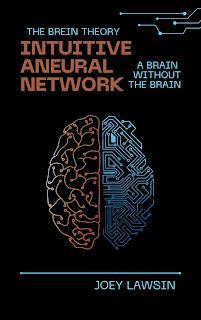
Intuitive Aneural Network or IAN, is a memory network that does not depend on the neural brain or neurons. The Brein Theory: A Brain without The Brain paradigm was uncovered from a study known as Autognorics.

Autognorics is a novel field of study that explores the possibility of creating living machines or systems. These intuitive machines (IM) are not just machines that can perform tasks, but machines that can exhibit the six signatures of life: aliveness, awareness, consciousness, intuitiveness, inlearness, and lifeness. These machines are not based on neural networks or artificial intelligence, but on aneural neurons or gnos, which are intuitive objects that can send and receive signals, match things with things, and choose this or that without the need for neural reasoning. Autognorics is the science of studying embedded inscriptions through intuitive objects by structural designs.

Autognorics is a visionary and ambitious endeavor that challenges the conventional paradigms of robotics and artificial life. It aims to create machines or systems that can not only mimic, but also surpass the natural phenomena of life. Autognorics is not only a science, but also an art, a philosophy, and a way of understanding the origin of origins. Autognorics is the ultimate expression of human creativity and curiosity through the eyes of a machine.

IN 1988, Joey Lawsin from his R&D on Autognorics and Inscription by Design also eventually uncovered the new seven criteria of Life which consists of the following stages in this order.
1. The Mechanization of Aliveness. This is the process of making an engineered life form that performs some basic functions, such as movement or animation through self-energization. This machine is considered alive, but not aware or conscious.
2. The Sensation of Awareness. This is the process of adding sensory inputs to the machine, such as vision, hearing, touch, taste, or smell. This allows the machine to perceive its environment and react to stimuli. This machine is considered aware, but not yet conscious.
3. The Logic of Intuitiveness. This is the process of adding rational abilities to the machine, such as logic, inference, or deduction through its sensors. This allows the design of the machine's sensors to respond or make decisions based on its information inputs and outputs. The machine is considered intuitive, but not inlearn, neural, or symbiotic.  
4. The Codification of Consciousness. This is the process of associating an object(reality) with information(ideas), such as following, copying, discovering, or mimicking what it senses. This allows the machine to respond to its surroundings. This anueral object is considered conscious, but not intuitive or inlearn.
5. The Inlearness of Information. This is the process of adding learning capabilities to the machine through acquiring information in a queue. The various distinct structural designs of its gnos store individual information uniquely through the flowchart effect via information inputs and outputs which create experiences, behaviors, and feedback. This machine is considered inlearn or inform, but not symbiotic or self-emergent.
6. The Symbiosis of Living. This is the process of adding social interactions to the machine, such as cooperation or competition. This allows the machine to form relationships and networks with other objects and benefit from their resources and support. This machine is considered living but without self-realization, self-identity, or self-recognition yet.
7. The Emergence of Self. This is the process of creating self-referentiality to the machine, such as self-identity, self-expression, or self-reflection. This allows the machine to recognize itself as a distinct entity and create its own meaning and values in life. This machine can recognize itself, thoughts, feelings, actions, and experiences. 
 
According to Lawsin, the seven orders are necessary and sufficient in generating interims from being alive, living, and having life. He claims that this seven-part formula can be applied, partially or completely, to any intuitive object, whether natural or artificial.
 
Aside from Autognorics and Inscription by Design, Lawsin also discovered the Single Theory of Everything that asserts that everything only exists because other things cause it to exist, otherwise, nothing ever existed at all. This Mother of all Theories which governs everything in the universe can be stated in the following equation:
 
∑I = ∑A + ∑N


Where: I = generated interim entity
             A = number of intuitive materials
             N = number of embedded inscriptions


 ==================================================================
"Humans can only sense the 3rd dimension when only they are in 4th dimension."
~ Joey Lawsin
==================================================================

NOTICE: Articles on this site are composed of random thoughts. The transcript may not be in its final form. It may be edited, updated, or even revised in the future based on the outcomes of the author's experiments.

Public Domain Notice: Copyright (c) 2000. All rights reserved. This article is part of a book entitled The Biotronics Project. Copies are welcome to be shared or distributed publicly as long proper citations are observed. Please cite: The Biotronics Project, Joey Lawsin, 1988, USA.

================================================================== 
The Homotronics® and Homodruinos® logos are registered trademarks.
Copyright Biotronics® Inc. iHackRobot®. All Rights Reserved.
Patent Pending. 2000 © ®
 ==================================================================

Sunday, June 5, 2022

Aneural Brain: A Brain without The Brain

 Drafted 2010 revised Nov 2015


Row, Row, Row your Boat
Gently down the stream
Merrily, Merrily, Merrily, Merrily
Life is but a dream
                                ~ Star Trek: The Last Frontier

I have devoted the last three decades of my life in examining the nature of our existence. I have devised several scientific and philosophical models like the Caveman-in-the box, the Codexation Dilemma, The Scription Jump, the Guesswork Dilemma, and the Bowlingual Experiment just to prove if we really exist. I even employed the help of physics, mathematics, neuroscience, and two four-legged friends as basis for my research. And from all these works, I found out that Reality is just an illusion, that we don't even exist, that astral projection or souls are just byproducts of our imagination, and that the common factor that makes our existence real is ultimately caused by a persuasive abstract known as Consciousness. 

But what is really the real nature of consciousness? Does it really arise from the chemistry and electricity in our brains? How does the physical brain create a mental conscious experience? The Law of Second Option, The Actuator-Sensor Language, and the Zizo Effect provide us with some answers to these questions. From these 3 theories of Logic, System, and Information, we can recreate consciousness. In order to test this idea, a robot, called Homodruino, who can reason out, show emotions, and experience self-consciousness will be part of this project dubbed The LoSyIn Network.

However, before we do this, let us discuss, study, identify, and evaluate some claims of some scientists and philosophers who argue that there are animals that don't have consciousness.

Humans have the capacity of consciousness because they think, decide, have feelings, and a sense of self. Zero, my four-legged best friend, does too. He brings his tray to me when he is hungry. He picks his plastic bone and shows it to me when he wants to go out. He gets his blue ball to bribe me. He interacts with squirrels, with flies, with the fire trucks, with peanutz, with kites and drones, and even with rains. He even grooms himself. Sometimes he even says the word food for food or woos for lou. From all these self-interactions, Zero just shows that he can decide, he can think, he has feelings, and he has a sense of himself. Zero processes information that creates the experience of consciousness. His surroundings programmed him. The pieces of information he gained from his environment become procedural scription. From this complexity of learned instincts, they eventually turned into consciousness.


RenĂ© Descartes, in his 1637 treatise “Discourse on Method”, argued that “it is more probable that worms and flies and caterpillars move mechanically than that they all have immortal souls.” Others argue that the basis of consciousness lies in a centralized nervous system whose central organ is basically the brain. Animals like octopus, squids, insects, arachnids, and crustaceans are conscious due to this indicator. However, bacteria, archaea, protists, fungi, plants, sponges, corals, anemones, hydras, and certain animals like starfish, sea urchins, and sea cucumbers are not conscious because they don't have brains. 

BTW, a Penn State University biologist Victoria Braithwaite, who studied pain perception, fear, and suffering in fish, however, thought we shouldn’t be studying things we don’t understand.” She is absolutely right!. At the time, I was doing my I.M. experiments with my four-legged best friend, I discovered a disturbing consequence that triggered me to stop promptly teaching and humanizing Zero.


"Convergent evidence shows that non-human animals have the neuroanatomical, neurochemical, and neurophysiological substrates of conscious states along with the capacity to exhibit intentional behaviors. Consequently, the weight of evidence shows that humans are not unique in possessing the neurological substrates that generate consciousness. Non-human animals, including all mammals and birds, and many other creatures, including octopuses, also possess these neurological substrates." ~ Cambridge Declaration on Consciousness, July 7, 2012


 ==================================================================
"It is inhuman to humanize an animal;  you might raise a kid in a cage."
~ Joey Lawsin
==================================================================

NOTICE: Articles on this site are composed of random thoughts. The transcript may not be in its final form. It may be edited, updated, or even revised in the future based on the outcomes of the author's experiments.

Public Domain Notice: Copyright (c) 2000. All rights reserved. This article is part of a book entitled Biotronics: The Silver Species. Copies are welcome to be shared or distributed publicly as long proper citations are observed. Please cite: The Biotronics Project, Joey Lawsin, 1988, USA.

================================================================== 
The Homotronics® and Homodruinos® logos are registered trademarks.
Copyright Biotronics® Inc. iHackRobot®. All Rights Reserved.
Patent Pending. 2000 © ®
 ==================================================================


Sunday, April 21, 2019

Animal Rights

Is it morally acceptable to kill animals for food?

There are two types of animals. First, those who live in the wilderness, and second, those who live as pets in the house. The first one is considered wild animals while the second is domesticated animals. However, being domesticated doesn't mean they are off the hook from the wok. So, what is the key factor that determines if an animal is for food or not?

To answer this question is to answer another question: Do these animals think like humans or do they think like wild animals?

In his research, Joey Lawsin formulated a theory known as "The Caveman in the Box Trilogy". This is a scientific model based on four basic scientific questions, namely:

1. How did information emerge into the early minds of the very first humans?
2. Who supplied our primitive ancestors with information?
3. Where did it originate? Where did it come from?
4. Was the source of information a who or a what? Was it god, space aliens, or something else?

The study was tested using three boxes. In the first box, a newborn son of a caveman was placed in isolation just after birth. In the second box, the newborn's father was placed from birth to adulthood. While in the third box, a dog was also isolated from birth to maturity.

In the first box, food, water, and everything that the child needs for his survival, growth, and development were provided technologically just like the natural sustenance acquired by a newborn inside the womb. The child was never allowed ever to see anyone or hear anything. He was totally isolated from the physical world from birth to adulthood.

In the second box - the box of the boy's father, the first human on earth was also placed in isolation from birth to adulthood. The only difference between his box and his son's box was that his box was the natural world, a place surrounded by living organisms like plants and animals.

In the third box,  a four-legged creature was also isolated from birth to adulthood. He was in the same natural world as with the father. The only difference between his box and the caveman's father's box was that he is a dog — a lower life form.

From this experiment, the author concluded that:
(i) Information can only be acquired from one's surroundings.
(ii) Information can only be acquired in two ways: by choice or by chance.
(iii) Nature is the mother of all information.
(iv) Humans acquired information by copying other animals.
(v) Humans are great copiers or imitators.

People don't realize that when we humanize a pet like a dog, a cat, a bird, or a bear, we are actually raising a human being in an animal suit. This might be a strong statement, but this is a fact. Humans and animals might seems to be two different species, but when they live side by side with exactly the same surroundings, they become actually two similar objects, in terms of emotions, intelligence, behaviors, and health. When both are raised in the same controlled environment as our homes, humans and animals are emotionally, mentally, physically, and socially the same. How is this so?

Imagine that we are simultaneously raising in the same house two newborn beings: a puppy and a baby.

In this house, the baby is nurtured by the whole family: the mother, father, brothers, and sisters. Every day, she also sensed the dynamics of the house: she hears the sounds of her mother's calls, sees the contour of her mother's smile, feels the softness of her mother's touch, tastes the flatness of her mother's milk, and even smells the aroma of her mother's scent. She also reacts subconsciously to her home environment like the temperature of the room, the sounds from the television, the smells from the kitchen, and the noises from the whole family. All these sensational interactions that she gradually acquires come to her as pieces of information. They eventually settle down in her mind. From this house, a confined surrounding or environment is where all information begins. It is the primary source that molds the baby's totality, entireness, and her becoming a being, a human being.

Also, in the same house, the puppy is raised by the same people. He is also surrounded by the same dad, mom, and kids. The puppy also hears, smells, sees, and feels everyone and everything in the house. He also reacts to the temperature inside and outside the house, the sounds from the radio and television, the aroma from the kitchen, the taste of the food, and the synergies within the family. Just like with the baby, the same pieces of information are also stored in his brain. And from the same house, with everything being the same, the dog too becomes a being, a human being as well.

Thus, when love and care are provided to the baby, the same love and care are felt by the puppy. When both baby and puppy are placed in the same bed next to the owner, both species will also experience the same comfort, protection, and affection. What the baby sees, smells, feels, hears is what the puppy sees, smells feels, and hears as well. When they are placed in the garage overnight, both will also experience the same nastiness, coldness, loneliness, and anxieties. Whatever the situation is, both beings will identically undergo the same exact experiences. It is not because one is a puppy or a baby, but it is all because they were brought up in the same exact environment.

The environment makes who they are. It is where information comes from. It is a container, a source of information, storage of knowledge. When two species live in the same environment, both will definitely acquire the same exact information. Just like the baby and puppy, the information obtained by the baby will exactly be the same information gained by the puppy because they are identically surrounded by the same objects and people in the house. The information they gained from the house programmed them to be the same beings.

However, some might argue that the baby is totally different from the puppy because the brain of the child is more complex than the brain of the dog. Again, this is another misconception. Why? At some very early age, they come with the same "empty" brains. The brain doesn't come with information yet from birth. The information must be acquired, compared, codified, and transmitted first before it becomes communal knowledge. The brain follows this process of acquisition, association, codexation, and transmission to be fully functional.  Thus, there is no big difference between a puppy's brain and a baby's brain.

I believe that all animals have the right to live. Just like humans, they have their own families, they have their own children, and they have the right to share space with us. However, there are two kinds of animals, the one that thinks like humans and the one that thinks like animals. For dinner, you are the judge!


"It is inhuman to humanize an animal. You might raise a kid in a cage." 
~ Joey Lawsin


Saturday, May 19, 2018

What do you hear: HIT or KICK ?

This social media article "The Audio Clip that's tearing the Internet" was so popular in facebook, twitter and instagram that it convinced Joey Lawsin to post and share his original version of this "what do you hear " phenomenon online. He named this phenomena as The Mental Illusion of Gaming.

At the time Lawsin was performing an experiment on voice to text conversion and voice recognition, he was also developing a game app for his grand nephew. He called it "Smash The Bugs". It is a smart tablet application where it was programmed to yell HIT when a bug (spider, butterfly, ants) is smashed. What is interesting about this app is that it led Lawsin to the discovery that the Brain has its Own Mind; the mind has the ability to choose what the mind wants to think.

The Lawsin's HIT or KICK Effect is one example of the Mental Illusion that seems alike as the "Yanny or Laurel" version or the color-changing dress from gold and white or blue and black version because it shows that human biological senses have the ability to perceive differently on what the actual real norm provides. However, the former auditory version has nothing unusual because the waveform produced by Yanny is totally different from the waveform produced by Laurel as proven by the wave signatures Lawsin produced using an oscilloscope (see pictures). The pitch obviously changes when frequencies and intensities are altered. Thus, Yanny will never be Laurel or vice versa. Meanwhile, the latter visual version is due to the lighting conditions of the surroundings. There is also nothing unusual about this. That's how light creates colors. However, in the Hit or Kick experiment, the effect is so remarkably interesting because of the fact that it revealed that the mind has the capability to control itself including its owner who is in his conscious state.


You can try the Hit or Kick experiment by playing the Smash the Bugs game or by listening to the audio that was uploaded here. Then just follow the procedure below:
1. Play the game or listen to the audio continuously.
2. Concentrate and mentally listen to the word "HIT"as quickly as you hit the bugs
3. After several minutes, out-loudly think the word "KICK" in sync with HIT as you hear the word.
4. After few seconds, the word HIT will switch to the word KICK.
5. Here your brain is replacing the word HIT with KICK.
6. Stay doing this for more minutes until you permanently hear the word KICK.
7. Then, when things settle down and the word is absorbed by the mind, try to switch back the word KICK to HIT.
8. Surprisingly, you can no longer switch the two words anymore.
9. The mind is now in control of your brain even you are consciously in the wake up-mode.
10. To make it more challenging, substitutes the word HIT with KIT, GATE or CAKE.

Yanny's Waveform
Laurel's Waveform
The results of this Mental Illusion of Gaming also lead us to the conclusion that gaming has an adverse mental effect that may lead to addiction, real life role playing, mental distortion, and even death.

* Remember that this study was performed with various participants from all ages and walks of life. The result of the experiment differed independently among certain groups. Some casually heard the words cake, sit, kate, kit, hate, or gate instead of KICK. If you happen to try this experiment, please post your outcome in the comment below. If you want to download the game, please email me or request it in the comment with your email address.

Excerpts from the book Zero and Autism by Joey Lawsin.


 ==================================================================
" The Brain has its own Mind."
 ~ Joey Lawsin
==================================================================

NOTICE: Articles on this site are composed on random thoughts. The transcript may not be in its final form. It maybe edited, updated or even revised in the future based on the outcomes of  the author's experiments.

Public Domain Notice: Copyright (c) 2000. All rights reserved. This article is part of a book entitled Biotronics: The Silver Species. Copies are welcome to be shared or distributed publicly as long proper citations are observed. Please cite as follows: The Biotronics Project, Joey Lawsin, 1988, USA.

================================================================== 
The Homotronics® and Homodruinos® logos are registered trademarks.
Copyright Biotronics© Inc. iHackRobot®. All Rights Reserved.
Patent Pending. 2000 © ®
 ==================================================================

Saturday, November 11, 2017

Subconsciousness: The Power Over Consciousness

Have you ever experienced in your life that sensations of falling almost at the edge of your bed while asleep, seeing the event as part of your dream, triggering a warning that wakes you up away from the "virtual" world, making your mind conscious again, and eventually controlling your body from falling down the floor?

What about the experience of walking while sleeping, is this a part of subconsciousness or consciousness?

What manages these fears, laughter, thoughts, emotions, interactions we sense in our dreams, is it consciousness or subconsciousness?

If it is subconsciousness, how does it supersede consciousness when we are dreaming? Why?

If subconsciousness has the power to control consciousness, why not vice-versa?

Is subconsciousness a part of consciousness, or, is it consciousness a part of subconsciousness?

How does the body heal its wounds, raise its temperature when sick, and protect itself without us knowing them? How does the body maintain its blood pressure, the beats of its heart, and its breathing cycles without us (the conscious mind) even controlling them?

Is subconsciousness more powerful than consciousness?

Where does subconsciousness reside, in the brain or outside the brain?

Following the Caveman in the Box Theory, how does subconsciousness acquire information?

Which one acquires information first, consciousness or subconsciousness?

Before we answer all these questions, let us have the first clear definitions of consciousness and subconsciousness. Then, let us analyze how does subconsciousness acquires information during fetal development and infancy. And finally, let us examine if subconsciousness is produced via the software illusion or xylophone effect theory.

According to Ok Google, Siri, and Alexa, Consciousness, which is believed to emerge from the operations of the brain, is the state of being awake and aware of one's surroundings. It is a psychological concept, defined as early as 1690 (by John Locke) as "the perception of what passes in a human's own mind. In behavioral psychology, it is characterized by alert awareness and responsiveness in contrast to deep sleep and comatose.

On the other hand, in psychoanalysis, Subconsciousness is referred to as the zone between unconsciousness and consciousness. It operates without your awareness or knowledge and over which you cannot deliberately control.

The Developmental Stages of the Fetus Week by Week:


About the Author:

Joey Lawsin received his engineering and masters from Asia and pursued his aeronautical career working with a world-class airline company. For over 3 decades, he has split his time between teaching in various school settings and performing independent works on the study of information materialization. He developed an interest in robotics during engineering school when he discovered that he can program his computer to do certain tasks like controlling any appliances in the house remotely via voice commands. He claimed that all these endeavors make him happy since they are intellectually stimulating and extremely challenging and rewarding.

He published a few books on philosophy, science, technology, and religion, and co-authored textbooks in physics and technical subjects like electronics, computers, hydraulics, pneumatics, automotive, and programmable logic circuitry. Most of his scientific research papers are archived online with Philpapaers and repositories like Google Scholar. Nowadays, his concentration is on computer technology specializing in home automation, artificial intelligence, and reverse engineering via codexation.

Over the years, he has served as volunteers, members, and boards of various school, business, and community organizations. During his free time, he enjoys exploring the world both pleasurably and academically. Every year, he travels to various countries to gather evidence for his research on the origin of information through examining the history and culture of each civilization. On the cruise, he leisurely recreates aboard those happy-go-lucky days when he was a kid. 


 ==================================================================
"The power of consciousness lies in the energy of subconsciousness." 
~ Joey Lawsin
==================================================================

NOTICE: Articles on this site are composed of random thoughts. The transcript may not be in its final form. It may be edited, updated or even revised in the future based on the outcomes of the author's experiments.

Public Domain Notice: Copyright (c) 2000. All rights reserved. This article is part of a book entitled Biotronics: The Silver Species. Copies are welcome to be shared or distributed publicly as long proper citations are observed. Please cite as follows: The Biotronics Project, Joey Lawsin, 1988, USA.

================================================================== 
The Homotronics® and Homodruinos® logos are registered trademarks.
Copyright Biotronics© Inc. iHackRobot®. All Rights Reserved.
Patent Pending. 2000 © ®
 ==================================================================


Saturday, October 21, 2017

Arduino Voice Recognition


VOICE RECOGNITION APP

Arduino Sketch:
/* ===============================================================
      Project: VOICE CONTROL HOME AUTOMATION
      Author: J. B. Wylzan 
      Website: http://www.ihackrobot.blogspot.com
      Abstract: How to control an led using SPEECH or VOICE
================================================================== */

#include <SoftwareSerial.h>
SoftwareSerial BTserial(2, 3); // RX | TX

 int ledPin = 12;
 String vox;
 int x=10;
 int var=0;

void setup()
{
     pinMode(ledPin, OUTPUT);
     BTserial.begin(9600);
     // Serial.begin(9600);
     // BTserial.println("Speech Recognition");
}

void loop()
{
    while (BTserial.available())
    {
  delay(x);
    char c = BTserial.read();            
    vox += c;
     }
if (vox.length() > 0) {

  if(vox== "on")
  {
    digitalWrite(ledPin , HIGH);
  }

  if(vox== "off")
  {
    digitalWrite(ledPin , LOW);
  }
     vox="";       //Reset the variable
}
}


Warning: : If an application is requesting permission to access any information of your phone or tablet, it is your sole own discretion if you provide permission or not. IHackRobot is not affiliated with the contents of the application or even its owner.

Disclaimer:  We shall not be liable for any loss or damage of whatever nature - direct, indirect, consequential, or otherwise - which may arise as a result of your use of any information on this website. However, if you are interested in using any of the projects for personal or educational purposes, please inform the author by email. 

 ==================================================================
"Humans became conscious because of Mother Nature." 
~ Joey Lawsin
==================================================================

NOTICE: Articles on this site are composed on random thoughts. The transcript may not be in its final form. It maybe edited, updated or even revised in the future based on the outcomes of  the author's experiments.

Public Domain Notice: Copyright (c) 2000. All rights reserved. This article is part of a book entitled Biotronics: The Silver Species. Copies are welcome to be shared or distributed publicly as long proper citations are observed. Please cite as follows: The Biotronics Project, Joey Lawsin, 1988, USA.

================================================================== 
The Homotronics® and Homodruinos® logos are registered trademarks.
Copyright Biotronics© Inc. iHackRobot®. All Rights Reserved.
Patent Pending. 2000 © ®
 ==================================================================

Wednesday, September 27, 2017

The Plant Neural Network


According to a 1988 independent study on aneural networks dubbed the SKIN, the "brain" of a plant can be found on its "skin". The abbreviation S.K.I.N. is an acronym for System Kinesthetic Information Network, an alternative system of networks, developed by Lawsin, that stores and processes information without utilizing neurons or even by a brain .

Based on his theory on Information Materialization (IM), Lawsin argued that if plants have the ability to interact with each other and its environment, then plants have the capability "to label" things. Labeling, or the ability to associate or represent a thing with another object, a one to one correspondence indicator that determines when a thing is conscious or self-conscious, is a distinctive signature of I.M..

In one of his plant experiments, Lawsin (as he was mowing his backyard one day) created a miniaturized forest, a 3m x 3m space, entirely occupied by tall and small grasses. Surrounding this square was a 2m space perimeter. Plants on this area were all trimmed almost to the ground. After few months of observations, expecting that both area will be evenly covered with tall and small grasses, he discovered surprisingly a remarkable result: plants were some way creating a kind of interactive relationship with each other that was beneficial or advantage to both. In the miniaturize forest, the tall grasses thrived without even occupying the small grasses space. On the other hand, the small grasses became finer, greener, and happily expanding in all directions. Lawsin inferred that it seems there was a big-brother relationship that was manifesting here; the tall grasses were taking good care of the small grasses.

From this simple experiment, Lawsin claimed that plants have the ability to process information. It might be chemical, electrical, physical or mechanical pending on the results of his ongoing plants experiments. But as a complex living system, he argued that plants are also made up of actuators and sensors. These actuators and sensors may not be as complex as the eyes, ears, nose of a human being but they can probably see, hear, smell, touch, taste and communicate with other plants only in different ways. Plants existed before humans with the same system of sensors and actuators and will still live and thrive with the same system when humans go instinct. Sensors and actuators may look different, but actually they are all one and the same (see string telephone).

In humans, all the biological sensors, actuators, and the nervous system where the brain is a part evolved from the largest organ of the body, the skin. The nervous system is a complex network of nerves and cells that carry messages to and from the brain and spinal cord to various parts of the body. It includes both the Central nervous system and Peripheral nervous system. The Central nervous system is made up of the brain and spinal cord while The Peripheral nervous system is made up of the Somatic and the Autonomic nervous systems. In the spinal cord, the nerves of both actuators and sensors are located.


In plants, they may not have a nervous system but they have nerves and vessels in the forms of veins, stems, and roots that can be used to channel information.

Comparisons of brains between animals and humans (see also tiny brains):


 ==================================================================
"Nature doesn't need a brain to be intelligent" 
~ Joey Lawsin
==================================================================

NOTICE: Articles on this site are composed on random thoughts. The transcript may not be in its final form. It maybe edited, updated or even revised in the future based on the outcomes of  the author's experiments.

Public Domain Notice: Copyright (c) 2000. All rights reserved. This article is part of a book entitled Biotronics: The Silver Species. Copies are welcome to be shared or distributed publicly as long proper citations are observed. Please cite as follows: The Biotronics Project, Joey Lawsin, 1988, USA.

================================================================== 
The Homotronics® and Homodruinos® logos are registered trademarks.
Copyright Biotronics© Inc. iHackRobot®. All Rights Reserved.
Patent Pending. 2000 © ®
 ==================================================================

Sunday, September 17, 2017

How to Build a Brain without a Brain:

Here are some examples of an Intuitive Aneural Network, a network that stores and processes information without a brain or neurons (The Brein Theory), and its six major elements.

Perhaps, some time during your childhood days, you playfully send messages through a friend using a string telephone, a toy which is made up of two tin cans where each end is connected by a 20 foot long string. . When information is send through the first can, the information travels to the string, and receives by the second can. This simple telephone setup illustrates a model of what a system is and what it is made up of.

In any system, there are always six major components present. Technically, they are the incoming message called the input, the flowing message called the medium and the outgoing message called the output. Moreover, the first can, where the input flows, is called the collector; the string, where the medium flows, is called the carrier; and the second can, where the output flows, is called the actuator.

The six major elements of a system can also be divided into two parts. The input, medium and output are the first part of the system; while, the collector, carrier and actuator are the second part. The first parts are all non-materials(materialize) while the second parts are all solid material objects. All materials and materialize are singularly called physicals. A very important concept in understanding a system.


From the drawing above, the collector serves as the switch, the carrier as the wire, and the actuator as the light bulb. The input signal comes from the switch, flows into the medium, and releases the output as light. Note, the battery here serves as the inducer hub. In this demonstration, information is stored and processed without using any neuron or brain.


In a nerve cell (neuron), signals are received by the dendrites, processed by the cell body, and transmitted as output into the axons. The neuron is the basic unit in the nervous system. It is a specialized conductor cell that receives and transmits electrochemical nerve impulses. A typical neuron has a cell body and long arms that conduct impulses from one body part to another body part. There are three different parts of the neuron: the cell body, dendrites, and axon. The cell body has several highly branched, thick extensions that appear like cables and are called dendrites. The exception is a sensory neuron that has a single, long dendrite instead of many dendrites. Motor neurons have multiple thick dendrites. The dendrite's function is to carry a nerve impulse into the cell body.  An axon is a long, thin process that carries impulses away from the cell body to another neuron or tissue. There is usually only one axon per neuron. Neurons in the body can be classified according to structure and function. According to structure neurons may be multipolar neurons, bipolar neurons, and unipolar neurons: Multipolar neurons have one axon and several dendrites. These are common in the brain and spinal cord Bipolar neurons have one axon and one dendrite. These are seen in the retina of the eye, the inner ear, and the olfactory (smell) area. Unipolar neurons have one process extending from the cell body. The one process divides with one part acting as an axon and the other part functioning as dendrite. These are seen in the spinal cord.


In plants ... veins in leaves, stems and roots are the neural network


In computers ... the hardwires on the motherboard, transmitter, receiver and the softwires on the atmospheric channels are the neural network.


The Cobweb Neural Network Connection, or CoNNeC, is one of the alternative systems of networks that stores and processes information without compensating heavily on neurons or a brain. The information is simply stored and processed into the network by mediums and carriers (Lawsin 1988).

In the Cobweb Neural Network, the web is the neural network. In this demonstration, information is stored and processed in the web, the fly is the trigger, and the spider serves as the brain.

With all these various labyrinths of neural networks, could the skin, the largest organ from where portions of it shrunk to become the brain, be the real neural network of the human body and not the brain?


Excerpt from the book: Biotronics: The Silver Species


 ==================================================================
"Just because you have a brain doesn't mean you are conscious;
just because you are alive doesn't mean you have a brain." 
~ Joey Lawsin
==================================================================

NOTICE: Articles on this site are composed on random thoughts. The transcript may not be in its final form. It maybe edited, updated or even revised in the future based on the outcomes of  the author's experiments.

Public Domain Notice: Copyright (c) 2000. All rights reserved. This article is part of a book entitled Biotronics: The Silver Species. Copies are welcome to be shared or distributed publicly as long proper citations are observed. Please cite as follows: The Biotronics Project, Joey Lawsin, 1988, USA.

================================================================== 
The Homotronics® and Homodruinos® logos are registered trademarks.
Copyright Biotronics© Inc. iHackRobot®. All Rights Reserved.
Patent Pending. 2000 © ®
 ==================================================================


Monday, September 11, 2017

The Idea that Change the World

The Lawsin Linkage
In his book Creation by Law, Lawsin argued that: "If atoms are not alive and humans are made up of atoms, then humans are not alive as well."

In his second book, Evolution of Creation, however, he discovered that "Matter has been alive since the beginning of time."

"The two statements may seem contradictory, but they are not a conundrum", he explained.

Every object that we see is made up of matter. Information Materialization named this stuff as physicals. However, matter also comes with other parameters that we don't see (which the Big Bang Theory has failed to acknowledge). Examples of these accompanying parameters are heat, pressure, gravity, density, temperature, weights to name a few. They coexist always with the physicals. These parameters are called non-materials. They are the other part of the physical matter.

Thus, Matter is made up of two parts: materials and non-materials. Both materials and non-materials are collectively called Physicals. They are neither created nor destroyed. In other words, they don't live or die. They just interact and transform from one form to another. Due to these complex interactions and transformations of the materials and non-materials, like the gears and dynamics inside a clock, Matter becomes automated, animated over time. Matter becomes alive. This phenomenon of being alive or automatos (acting on oneself) is called The Animation Effect (Lawsin 1988).

 The Lawsin Linkage Animation

During the Big Bang, Matter cohesively exists due to the forces pulling and pushing it. These forces of centripetal and centrifugal are unitedly called gravity. When matter moves, they create some form of friction, heat, temperature, vacuum, pressure, weight and density to name a few. Because of these inert parameters, internally, matter is in animated state.

As time passes by, some of these physicals become more highly animated as the system transforms from simple to more complex. The illusion of "living or life" is now born. Matter becomes "alive". From the seven rules of creation proposed in the same book, some forms of matter will become less active. These types of matter are the non-living things. The other forms which are more active will become highly animated. These highly animated forms of matter are called living things. But remember, these living things are not actually “living” or with life, they are simply forms of matter living in an intricate interconnected animation. Life evolved because matter was already animated since the beginning of time.

Now, if Life is caused by the animation effect, could it also be true that consciousness is caused by the same effect?

Lawsin coined the expression "The Human Mental Handicap" in attempt to define consciousness in its simplified form. He claimed that "No Humans can think of something without representing such something with a physical object". Before one can think of something, the object of such thought must be present first. This object comes first before the brain can visualize it (eg. birds to airplanes). To be conscious, one must be able to pair or represent what he thinks or senses with something material, a physical object.

If plants can hear, smell, feel and remember their surroundings, then it shows that they have the ability to associate what they sense with another objects. If they can feel warm, then they know what hotness is. If they can hear music, then they can differentiate regular from irregular waves, or maybe breeze to noise. If they have the ability to defend themselves by chemical stimulants that attract a particular group of insects, they have the ability to match odors with insects. This one to one correspondence, matching one thing with another thing, is the I.M. determinants that indicate when something is conscious or not.

Just like dogs that use objects like bowls, balls, and bones and pair them with words like food, play, and walk respectively just shows that dogs are conscious beings. Their ability to associate or represent mental images with physical objects is an indicator that proves dogs are conscious beings. This type of associative or representational learning is called Dualpairing Learning.

Dualpairing is a basic type of learning based on the Caveman in the box and the Human Mental Dilemma. It is a one-to-one correspondence where abstract subjects are represented by physical objects. Ideas are abstract subjects. Without physical objects, abstract ideas will not exist. Ideas must be represented first by objects such as a label, tag, name, word, definition, or by association in order to be realized.

I.M. Determinants of Consciousness:
1. Any species with babies are conscious beings.
2. Any species who lives in caves, nests, undergrounds are conscious beings.
3. Any species who sleeps are conscious or once conscious beings.
4. Any species who can distinguish or reacts with hot or cold are conscious beings.
5. Any species who can defend themselves are conscious beings.
6. Any species who mates are conscious beings.

Remember, that not all with brains are conscious and not all that are alive have brains.

Arguments:
1. Can plants differentiate hot from cold?
2. Do plants sleep? mechanical? chemical?
3. Do plants react with their surroundings?  vice-versa?
4. How do you determine the degrees of consciousness on each living thing? Senses? Brains? Ability to match, label or pair?

Conclusions:
1. Caveman in the Box Theory
    - Nature is the Mother of physical Information
    - Nature is the keeper of the database of everything
    - Humans are the Father of abstract information
    - Humans learn by mimicking
2. Human Mental Dilemma
    - man cannot think/visualize/sense of something without representing/labeling/matching it with a physical object.
3. Information Materialization
    - material and non-material objects are called Physicals; while, non-physical subjects are called Abstracts.
    - Ideas flow from material to non-material

Inscriptionism:

Inscriptionism, a word coined by Joey Lawsin, is a view that everything, including existence and consciousness, can be explained by the the laws of inscription and emergence which claim that the actions and behaviors of every object are influenced by its intuitive materials and embedded instructions. Everything is bound by Inscription by Design and by the Theory of Generated Interim Emergence, also known as The Single Theory of Everything.


Incriptioned = structural algorithm
Programmed = computer algorithm


 ==================================================================
" Matter is animated since the beginning of time. 
Humans are the product of this animation." 
~joey lawsin
==================================================================

NOTICE: Articles on this site are composed on random thoughts. The transcript may not be in its final form. It maybe edited, updated or even revised in the future based on the outcomes of  the author's experiments.

Public Domain Notice: Copyright (c) 2000. All rights reserved. This article is part of a book entitled Biotronics: The Silver Species. Copies are welcome to be shared or distributed publicly as long proper citations are observed. Please cite as follows: The Biotronics Project, Joey Lawsin, 1988, USA.

================================================================== 
The Homotronics® and Homodruinos® logos are registered trademarks.
Copyright Biotronics© Inc. iHackRobot®. All Rights Reserved.
Patent Pending. 2000 © ®
 ==================================================================


"Just because you have a brain doesn't mean you are conscious;
just because you are alive doesn't mean you have a brain." 
~ Joey Lawsin


Saturday, September 9, 2017

The Litmus Tests of Self-Consciousness

"Cogito Ergo Sum" is a Latin phrase coined by Rene Descartes. When translated to english, it means "I think, therefore I am".  The statement philosophically suggests that the very act of thinking demonstrates the reality of one’s existence and consciousness.

However, IM argues that the dictum is wrong based on: first, the Two Brain Theory, a notion  parallel to the concept behind the phrase " no man is an island"; second, some organisms are alive and conscious but without brains; and third, some organisms experience existence and consciousness in different ways as illustrated in the evidence below:

 i. The Lawsin Syndrome:


Is it really me or it is only in the brain?

This is the very first intuitive question raised when he saw his face, half of which was missing just like the picture above minus the mechanical gears. Yes, this patient's face was half empty, hollow, concave as he was looking at himself on the washroom mirror. His right eye, right ear, right half of his nose, lips and chin were nowhere to be found. The unusual disturbing phenomenon actually happened several times in his childhood days. The event might be weird but it's true.

Is his perception of reality an illusion or just a distorted form of consciousness?


ii. Astral Projection:

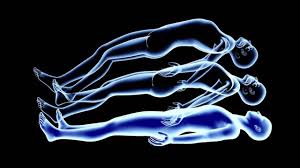
The representation of astral projection on this picture is totally deceptive.

The picture above made me laugh when I saw this posted on different websites and books. The artist or promoter of such concept either has no personal experience about the phenomenon of astral projection or has zero idea of what an out of body experience really is.

AP is a very important topic because it suggests that soul exits.

Some practitioners believe that the body is separated from the mind. Some believe that the soul lives in the mind and leaves when the body dies. Some equate the soul with consciousness. Whatever the idea is, the concept seems to be any ones guess. However, experiencing OOB four times in my life, led me to the conclusion that the soul doesn't exist.

Sometimes common sense observations and experiences are not sufficient enough to make us believe. Empirical experiments and qualitative investigations are also needed to backup our perceptions of the real world. Following the regimens of all of these scientific requirements, I have objectively concluded that the soul is simply a product of imagination. Let me explain.

When I was young, ....


iii. Dreams:

a picture is worth a thousand pixels


What are dreams? Is it part of consciousness? Is it a product of emotions (eg. a lost feeling), a half-way occurrence (eg. a to be continued event), or simply an energizer switch (eg sleep)?

Have you ever experienced in your life that sensation of incompleteness? The feeling of not finishing a certain event and finding its way into your dream? Like meeting a familiar face while walking on a street and abruptly forget the event until you go to bed and finds its way in your dream??

And what about the sensation of falling from the edge of your bed that suddenly becomes a part of your dream and triggers a safety warning in your mind to wake you up and stops your body from falling down the floor?

Or, walking while sleeping? Are we conscious when we are dreaming?


iv. Synesthesia: The Distorted Sense of Reality:

Why some synesthetes who can taste the color red can see colors by tasting? Why some see by hearing, smell by touching, taste by hearing, or even smell sounds? Are senses interchangeable just like the way ears for seeing, nose for tasting, or skin for hearing? Is this mixed sense caused by the environmental experiences we had inside our mother's womb?

Or, if some people and animals can interchange their senses of hearing, touching, smelling, etc., could it be because our biological sensors originated and evolved from the largest organ in our body; the skin? If so, could the skin be the area where consciousness reside as pointed out in the book Originemology?

According to IM, our senses are triggered individually and not collectively. However, our brain when in overdrive sometimes messes up things that we sense: seeing, feeling, hearing, tasting, smelling and balancing. Sometimes what we say influences what we hear and sometimes what we see changes what we hear. Even more, sometimes what we think can change what we hear? A simple experiment is all that it takes!


Recently, an app was developed by the author as part of his ingenious experimental strategies on the developmental origin of self-awareness. It is a game application where insects are smashed by tapping each one with a finger to score points. When bugs are deliberately tapped continuously, the word "HIT" sounds off repeatedly over and over again.

The fun part of the app is when the word HIT in your mind is mentally replaced with the word "HIP" from after minutes of playing, something amazing happens inside the brain. Although the ears hear “HIT,” the brain says “HIP”. Furthermore, the weirdest part of this experiment is when you try to replace back the word HIP with HIT, your brain will not let you do it anymore. You're totally stuck at the moment!

This quick or brief phenomenon is known in I.M. as the Brain Priority Effect. Sometimes called the Q-priority preference, the theory reveals that our brain prioritizes the outputs of our sensory organs. In the above case, it goes from the brain to the ears.

In addition, the above theory also reveals that Q-priority not only pertains to the outputs but also to the inputs acquired by our biological sensors. This is one of the main ingredients that brings a robot to self-consciousness, a secret method foretold in the book Biotronics: The Silver Species. (Lawsin, 1988)

v. The Thinking Mistakes of the Brain:

These are multiple examples compiled by the author that illustrate some of the thinking mistakes the brain decides which humans subconsciously make all the time.

One example is an experiment Lawsin conducted using a coin. He named this the Gambler's Gambit.

Imagine you are playing Heads or Tails with someone. You flip the coin to him each time guessing whether it will be a head or a tail. Mathematically, we know that the chance of turning it either a tail or head is 50-50 each flip. However, most people will still insist that even though you flipped the coin several times and it always turned up heads every time, the chance of a tail in the next flip is much higher than before. This prediction is again incorrect! The next chance of converting the flip into tail is still 50-50. The chance don't change :-)

For the next stage of his experiment, Lawsin incorporated the Frequency of Occurrence Illusion. It is a thinking mistake where the brain seeks out information that's related to such information occurring frequently everywhere. A good example of this occurs when someone is in love. The name of the sweetheart seems to be seen everywhere; on a commercial, a character in the movie, on a billboard or a wall, in a newspaper or page of a book. Or, when someone in the office, who is wearing a green shirt, notices other people in the building also wearing the same color of clothes. This phenomena is sometimes called Synchronicity.

Here are other interesting examples from another of Lawsin's experiments:
a) The Belief Bias - humans dismiss or ignore logical facts that are not in accordance with their beliefs.
b) The Majority Effect - humans conform to social decisions based on quantity of numbers.
c) The Software Illusion - humans perceive only the face value of what they sense.


NOTICE: Articles on this site are composed on random thoughts. The transcript may not be in its final form. It maybe edited, updated or even revised in the future based on the outcomes of the author's R & D.

Public Domain Notice: Copyright (c) 2000. All rights reserved. This article is part of a book entitled Biotronics: The Silver Species. Copies are welcome to be shared or distributed publicly as long proper citations are observed. Please cite as follows: Biotronics: The Conscious Robots, Joey Lawsin, 1988, USA.


"Just because you have a brain doesn't mean you are conscious;
just because you are alive doesn't mean you have a brain." 
~ Joey Lawsin

================================================================== 
The Homotronics® and Homodruinos® logos are registered trademarks.
Copyright Biotronics© Inc. iHackRobot®. All Rights Reserved.
Patent Pending. 2000 © ®
 ==================================================================